{{ detail.title }}
{{ detail.lead }}
{{ para }}
“{{ q0text }}”
{{ q0src }}
“{{ q1text }}”
{{ p }}
{{ detail.lead }}
{{ para }}
“{{ q0text }}”
{{ q0src }}
“{{ q1text }}”
{{ p }}
Circular Commons gathers eighteen initiatives that keep materials, spaces and skills in use in cities around the world — repairing, reusing, sharing, building with what is already there, and organising themselves to keep it going.
The site is built on doctoral research of the same name, carried out by Tamara Egger at the Faculty of Architecture and the Built Environment, TU Delft, between September 2021 and September 2025. That research produced a series of academic articles and a book, all of which you can find under Publications.
Most research like this stays where it was written: in journals behind paywalls, in a thesis few people will ever open. This portal exists to get it out. Together with filmmakers, artists, designers and communication specialists, we turned the research into something you can explore in pieces — a few minutes at a time, in whatever order you like. It is made for anyone curious about how urban life could work differently: neighbours, activists, students, designers, public servants.
The invitation is a simple one. Look at what people are already doing, in eighteen initiatives across four continents, and consider what circular, communal living could mean where you are.
This platform went online in 2026. It is a static archive and will stay as it is.

Catalog of Cases — eighteen circular commons around the world, each with links to explore further.
Films — one medium-length documentary and three short films: portraits of circular commons in practice.
Publications — the academic work this portal is built on, in full.
Lessons Learned — what this research learned along the way, drawn from the cases and written to be passed on.
Tamara Egger is an architect and urbanist who works where architecture, urban activism, research and art overlap — usually with other people, often outside the office.
For many years she worked with community-based urban interventions across Latin America: small, often temporary, built together with the people who live there, and all pointed at the same thing — more sustainable and more just cities. That work is where the questions behind this project come from.
She is now a PhD researcher at the Faculty of Architecture and the Built Environment, TU Delft. Her thesis, Circular Commons, follows eighteen places around the world where people keep materials, spaces and skills in use together. The question underneath it is a plain one: how do communities make everyday urban life resourceful, and what does it take to keep it that way?
She has edited and helped publish books including the Urban Design Lab Handbook and Citizen-led Urbanism in Latin America.
linkedin.com/in/tamara-egger-citiesOliver Olivo is a filmmaker and civic storyteller who works with documentary and fiction film, and with service design. For the Circular Commons project, Oliver Olivo edited the stories documented during the fieldwork and produced the final film and a series of short videos.
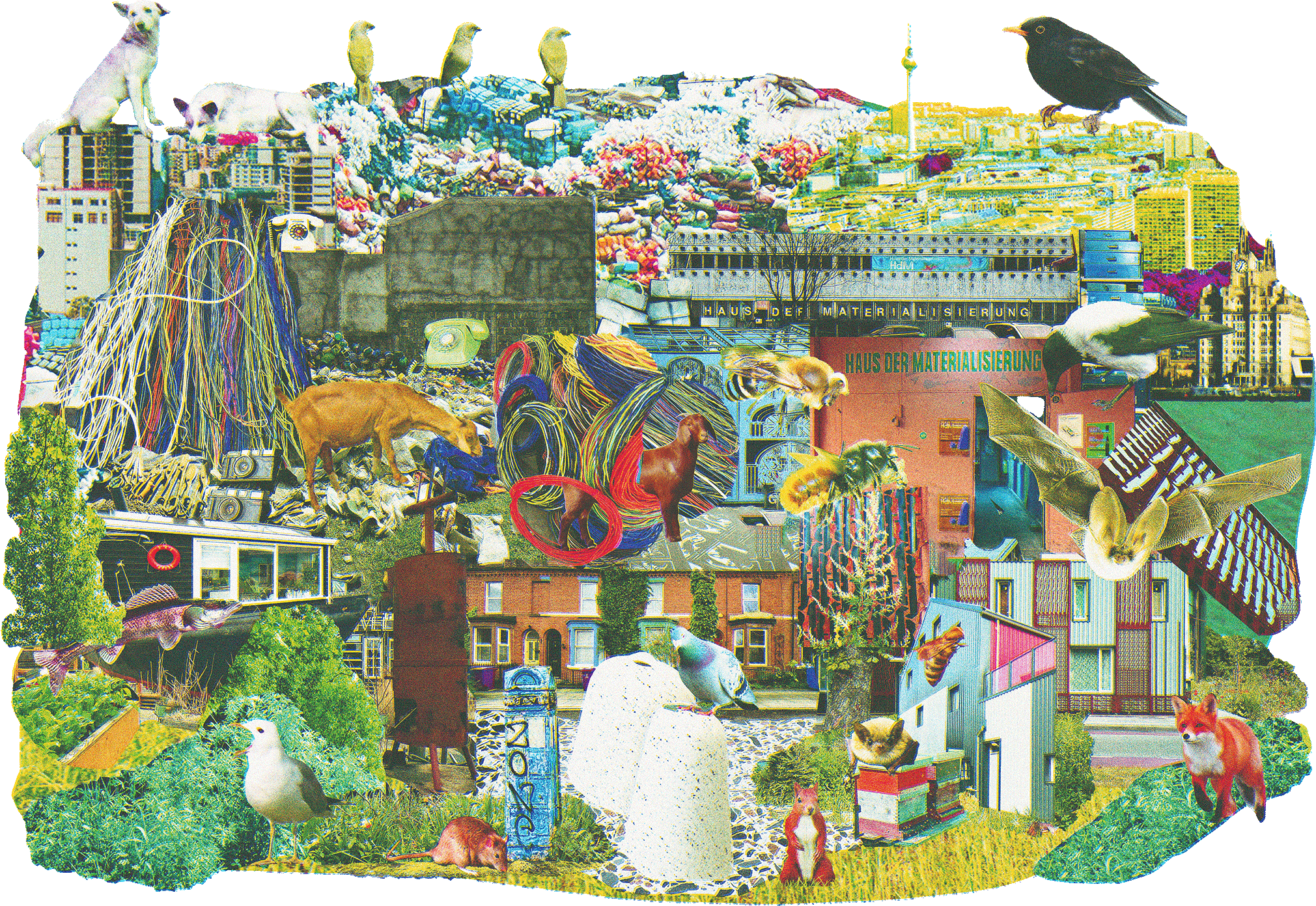
Marie Vermont is a Vienna-based artist and musician who processes and composes sonic and visual material on places and non-places, commons, and other topics and non-topics. For the Circular Commons project, Marie Vermont created collages and sounds stemming from the five case studies and other associated material.
Fabian Elgueta is a Chilean designer and product lead based in Madrid who explores how digital tools can make knowledge more open, usable and accessible. For the Circular Commons project, Fabian Elgueta designed and built the site and its interactive content.
Melina Sciolo is a Buenos Aires-based artist and environmental communicator who works on waste, reuse and repair across art, education and policy — from training young recyclers to transform discarded material into objects, to recycling legislation and the Club de Reparadores. For the Circular Commons project, Melina Sciolo worked as communication expert, translating academic content into forms accessible to a broader audience.
Almost everything on this site was learned from other people. The initiatives gathered in the Catalog of Cases have spent years working out how circular, communal living actually functions — largely through trial and error, and largely without anyone asking them to. This portal collects what they were generous enough to share. Our thanks to all of them.
This platform received financial support from the Future Earth Pathways Initiative through the Pathways Communication Grant (2025–2026). The grant supports researchers in communicating the outcomes of completed, place-based sustainability research to audiences beyond academia.
We welcome comments on the site and its contents. Suggestions for other practices, corrections, encouragement, or general observations are all welcome by email: tamaregg@gmail.com
This website is not run as a commercial venture and does not represent any commercial interest.
Contents of the site may be copied, shared or distributed only in accordance with the following Creative Commons licence:
CC BY-NC-ND 4.0
Attribution-NonCommercial-NoDerivatives 4.0 International. This licence lets you copy and distribute the material in any medium or format, in unadapted form only, for non-commercial purposes only, and only with attribution to the creator.
This section is part of the full site map. In this first design phase the Home, Catalogue and a sample case study (BlueCity) are built out.
Browse the catalogue →